
Lesson12: Melo Pearls

Melo pearls are among the rarest pearls discussed in the Pearl Academy. Sometimes called Flame Pearls or Dragon Pearls in trade storytelling, they are best understood as natural non-nacreous pearls formed in Melo volutes, not in the pearl oysters that produce most of the pearls people know from jewelry stores.
That distinction matters. A typical nacreous pearl is valued for its layered nacre, orient, and overtone. A Melo pearl is different: it is prized for its saturated orange bodycolor, porcelain-like luster, and the flame-like surface structures that make each fine example look almost alive.
In this lesson, we will focus on what Melo pearls are, where they come from, how to recognize their main features, and why exceptional examples are so rare and valuable.
What Is a Melo Pearl?
According to the CIBJO Pearl Book, a Melo pearl is “a natural non nacreous pearl” found in Melo species volutes. That definition is useful because it immediately separates Melo pearls from the nacreous pearls formed by pearl oysters.
In practical terms, this means a Melo pearl does not show the classic iridescent nacreous look that readers may associate with Akoya, South Sea, or many freshwater pearls. Instead, fine Melo pearls show a smooth, porcelaneous appearance, often with visible flame structures and a rich, warm color range.
Why Melo Pearls Look Different from Typical Pearls
Most pearls in mainstream jewelry are judged first by nacre quality, luster, surface, shape, and matching. Melo pearls belong to a different visual family. Their beauty comes less from iridescent orient and more from three things:
- a glowing orange to yellowish-orange bodycolor
- a porcelain-like surface appearance
- flame structures that can look patchy, radiating, jagged, or softly layered
That is why a Melo pearl can look unmistakably “pearl-like,” yet still appear very different from the classic pearl image most buyers have in mind.
Where Do Melo Pearls Come From?
Melo pearls are associated with large marine volutes of the genus Melo found in warm waters across Southeast Asia and nearby Indo-Pacific regions. Trade literature and gemological references commonly connect them with areas such as Vietnam, Thailand, Myanmar, Malaysia, Cambodia, and the South China Sea region.
Older retail descriptions often simplify the story by saying Melo pearls come from Melo melo. That is partly true in trade usage, but for an educational lesson, the broader and safer wording is that the pearl category is tied to Melo species volutes, not only a single shell description.
The Host Mollusk Behind Melo Pearls
A Melo pearl is not produced by a pearl oyster. It forms inside a large sea snail, a marine gastropod. That is one of the reasons Melo pearls feel so different from mainstream pearl categories both biologically and visually.
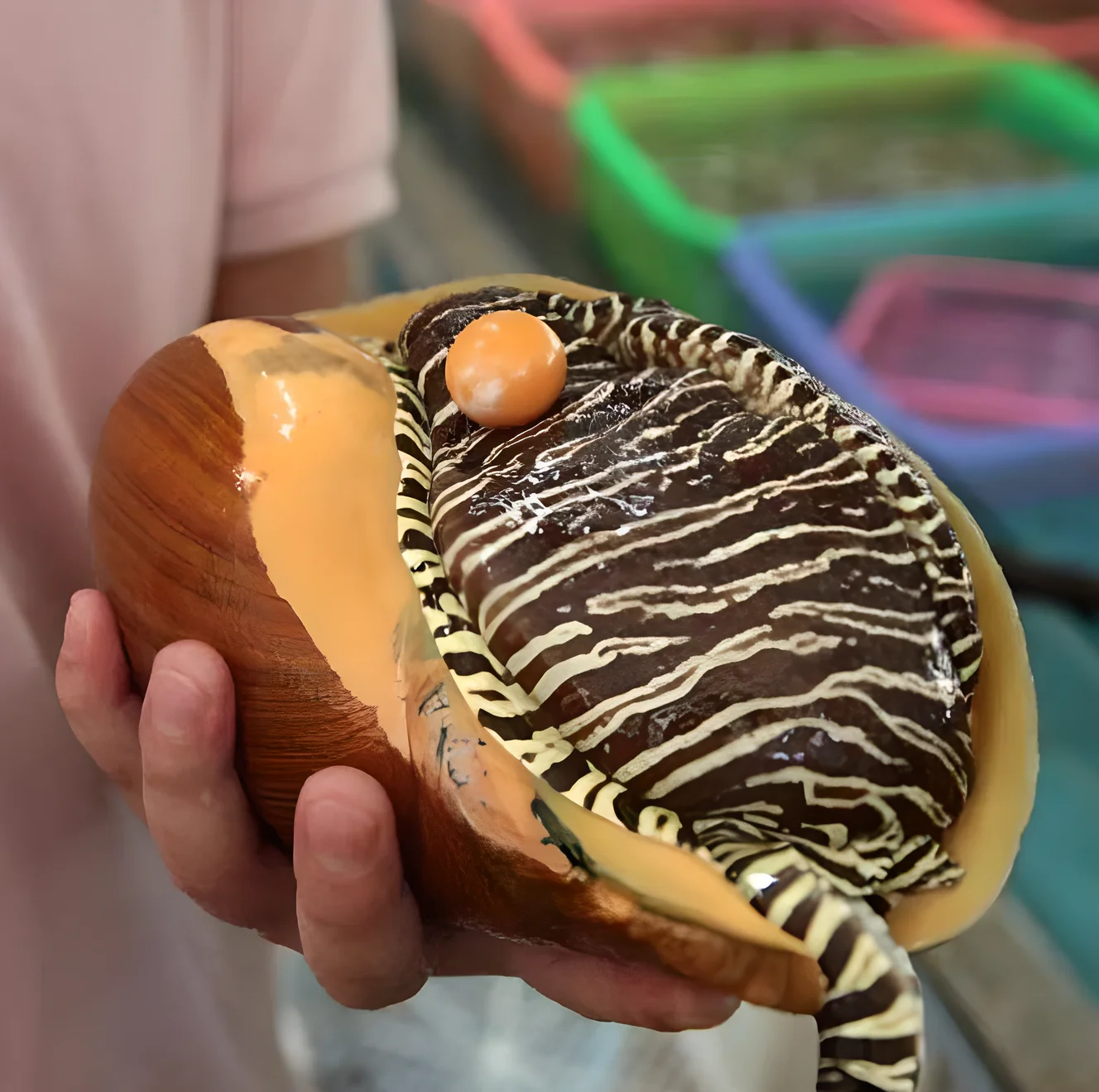
This is also why Melo pearls sit so naturally beside other rare non-nacreous pearls in gemological discussions. When you understand the host mollusk, it becomes easier to understand the pearl’s unusual appearance, rarity, and market identity.
Key Characteristics of Melo Pearls
Color
The best-known Melo pearls are orange, but “orange” is not a single look. Fine examples can range from soft yellowish orange to deep, rich cantaloupe-like orange. In the market, vivid and even orange color is usually the most admired.
Flame Pattern
The flame pattern is one of the most famous features of Melo pearls. Under magnification and even to the eye on good examples, the surface may show flame-like forms that appear patchy, jagged, radiating, or layered.
GIA has described Melo pearls as showing visible flames with jagged edges, while other gemological discussions of non-nacreous pearls explain these patterns as the visual result of their internal fibrous or lamellar structure. In other words, the pattern is not a decorative accident. It is part of how the material is built.
Luster, Shape, and Surface
Instead of sharp iridescent orient, a fine Melo pearl usually shows a porcelain-like luster. That softer, glowing appearance is one of its signatures.
Round and near-round examples are especially desirable. Clean surfaces, strong color, and attractive flame structure increase desirability further. As with many rare natural pearls, truly fine combinations of all these traits are uncommon.

Are Melo Pearls Natural or Cultured?
For practical market purposes, readers should think of Melo pearls as rare natural pearls. High-quality examples are encountered as unusual natural finds rather than as a standardized cultured pearl category available in regular commercial production.
That is an important reason they remain so fascinating. A beautiful Melo pearl is not just attractive; it also represents a natural accident that occurred in an uncommon host mollusk and only occasionally enters the market.
Why Are Melo Pearls So Valuable?
Melo pearls are prized because rarity and beauty come together in a very narrow window. Their value is usually shaped by the combination of:
- bodycolor, especially strong and attractive orange
- size
- roundness or pleasing shape
- surface cleanliness
- clarity and appeal of flame structure
- overall rarity as natural pearls
A pearl does not need to be the largest to be important. A smaller pearl with better color, cleaner surface, and stronger visual presence may be more desirable than a larger but weaker example.
A Real Auction Signal
Auction history helps show how exceptional top Melo pearls are. In a 2010 Christie’s lot description for a 224.30 ct Melo pearl, the house described it as one of only nine Melo pearls ever offered for sale at auction at that time. Christie’s also highlighted its almost perfectly circular form, orange color, and clean surface.
That kind of language is useful for education because it shows how the trade reads value: not just “rare,” but rare and round, rare and clean, rare and strong in color.
Why This Lesson Matters
Melo pearls are a good reminder that the word pearl covers more than one visual world. Not every important pearl is nacreous. Not every great pearl has orient. And not every pearl of value comes from a cultivated pearl farm.
For students of pearls, Melo pearls are important because they expand the eye. They teach you to recognize non-nacreous beauty, to respect unusual biological origins, and to judge rarity with more nuance.
What is a Melo pearl?
A Melo pearl is a natural non-nacreous pearl formed in a Melo species volute, a large marine sea snail rather than a pearl oyster.
Why are Melo pearls orange?
Their appeal comes from natural bodycolor in the yellow-orange to deep orange range, often paired with visible flame structure and porcelain-like luster.
Are Melo pearls cultured?
In market reality, fine Melo pearls are treated as rare natural pearls, not as a mainstream cultured pearl category.
Why are Melo pearls so expensive?
Because fine examples combine several scarce qualities at once: natural origin, unusual host mollusk, strong orange color, attractive flame pattern, clean surface, and rare sizes or shapes.
Conclusion
Melo pearls occupy a special place in the pearl world. They are rare, natural, visually distinctive, and unlike the nacreous pearls most readers first learn to recognize. Their color, flame structure, and porcelaneous glow make them one of the most memorable non-nacreous pearl types in the trade.
In the next lesson, we move from one of the rarest natural non-nacreous pearls to a very different pearl family: Akoya pearls, whose identity is built around nacre, mirror-like luster, and a highly recognizable cultivated pearl tradition.