
How to Tell if Pearls Are Real or Fake

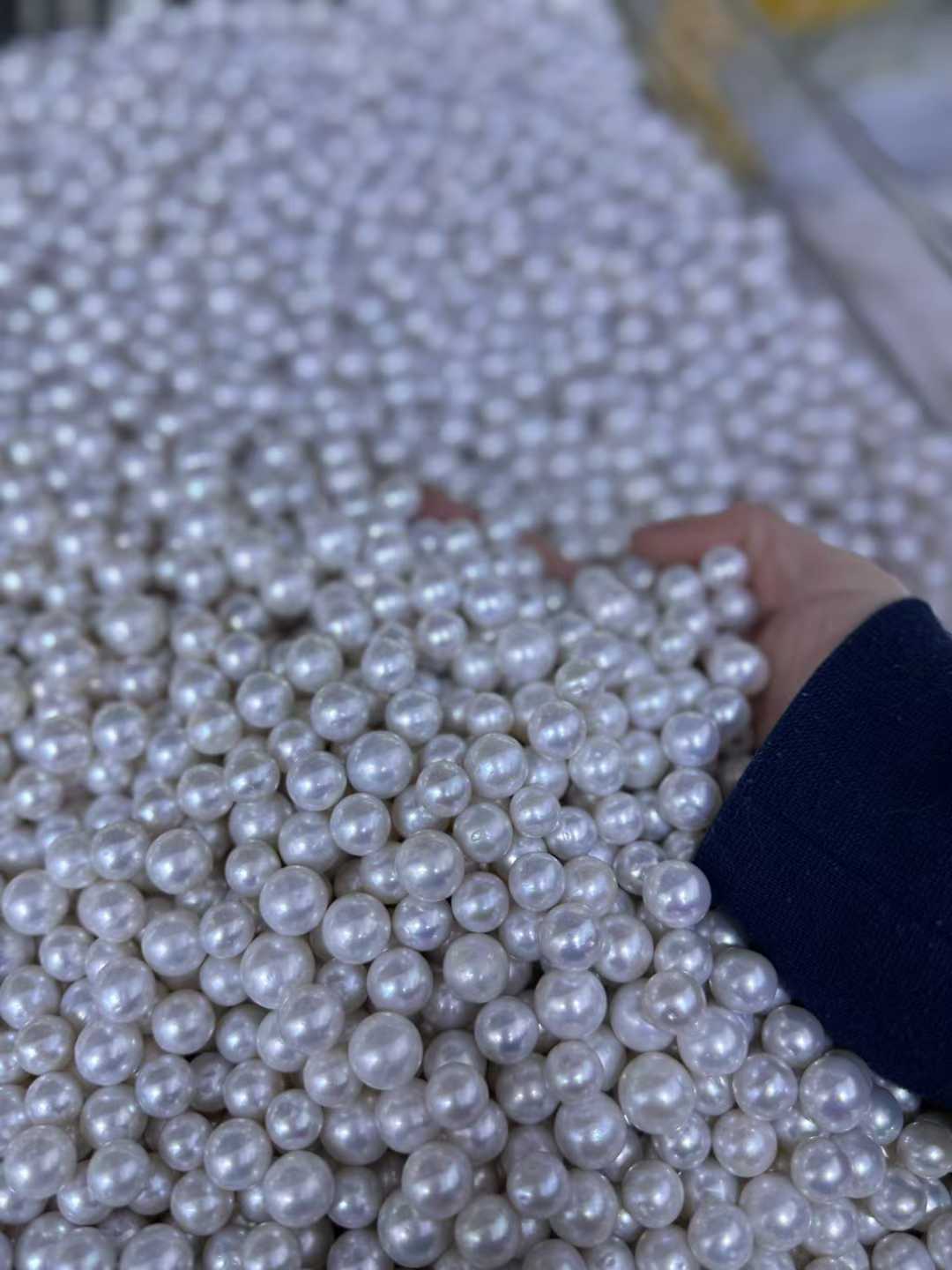
If you are trying to figure out whether a pearl is real, the first thing to know is this: real pearls can be natural or cultured. In today’s jewelry market, most genuine pearls you will encounter are cultured pearls, while imitation pearls are manufactured look-alikes made from materials such as glass, shell, plastic, or composites. GIA explains this clearly in its guide on whether cultured pearls are real pearls.
That distinction matters because many shoppers still assume “cultured” means “not real.” It does not. In pearl terminology, the more useful comparison is usually genuine pearl vs. imitation pearl, not cultured vs. real. U.S. jewelry rules also make clear that terms such as “real” or “genuine” should not be used for imitation pearls; you can review that language in the official federal jewelry guides for pearl terminology.
Just as important, no single at-home trick can give you laboratory-level certainty. A few simple checks can help you screen out obvious fakes, but if you need a confident answer about natural vs. cultured, or whether a pearl has been treated, you are moving into professional gemological territory. GIA notes that reliable separation of natural and cultured pearls uses visual examination together with X-radiography and other advanced testing methods.
Quick Guide
- What “real pearls” actually means
- The most useful at-home checks
- What fake pearls often look like
- When to ask a jeweler or lab
What “real pearls” actually means
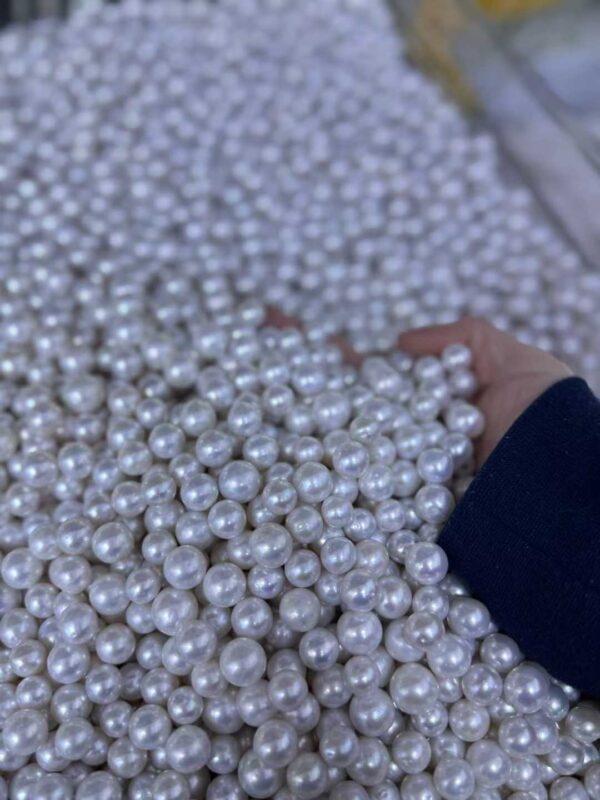
A real pearl is a pearl formed by a mollusk. A natural pearl forms without human intervention. A cultured pearl is also a real pearl, but the process is started with human assistance. An imitation pearl is not a pearl at all in the gemological sense; it is a manufactured product made to imitate the look of a pearl.
This is where many online articles become confusing. They mix up three different questions:
- Is it a genuine pearl or an imitation?
- If it is genuine, is it natural or cultured?
- If it is cultured, are there treatments that matter?
For most readers searching “how to tell if pearls are real,” the first question is the one that matters. If your pearl is cultured, it is still a real pearl. GIA also has a separate explanation of the difference between natural and cultured pearls, which is useful if you want to go deeper.
The most useful at-home checks
When I think about practical pearl screening, I would not start with internet gimmicks. I would start with the clues that usually tell you more: surface, luster, drill holes, and overall matching. These are not lab tests, but they are more useful than treating one “trick” as a final answer.
1. Look for slight natural irregularity
Real pearls rarely look perfectly identical under close inspection. Even fine pearls tend to show tiny differences in contour, overtone, surface texture, or shape. Imitation pearls often look too uniform, especially when every pearl in a strand seems almost machine-made.
This does not mean every imperfect pearl is real, or every well-matched strand is fake. High-quality cultured pearls can be matched beautifully. But when a strand looks unnaturally identical in every detail, it is worth slowing down and looking more closely.
2. Check the luster depth, not just “shine”
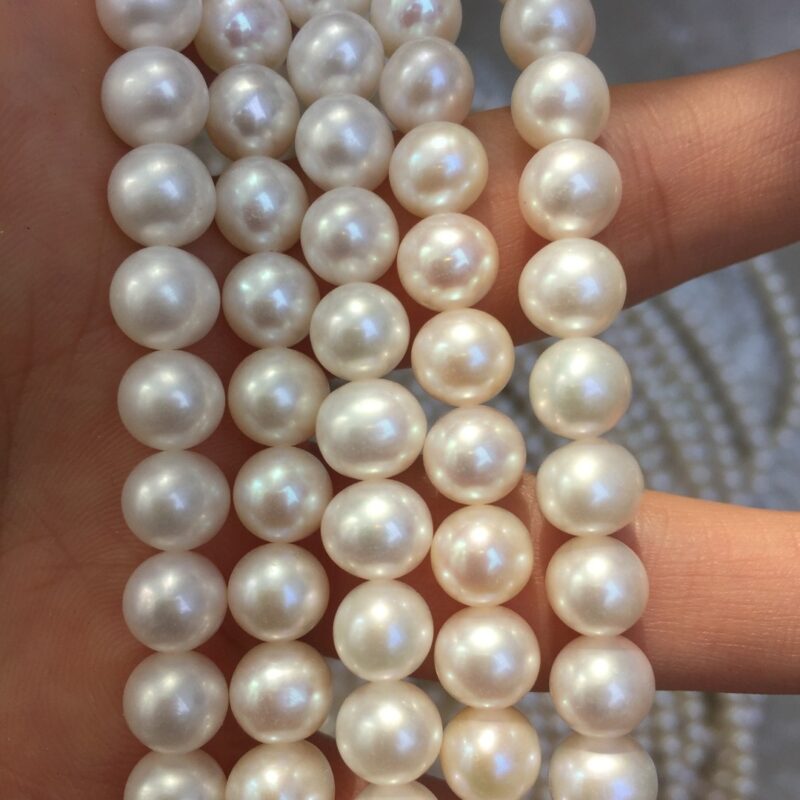
A fake pearl can be shiny. What often gives a real pearl away is the depth of the luster. Genuine pearls usually reflect light with a more layered, dimensional look because nacre interacts with light in a way that feels alive rather than flat. Imitation pearls may look glossy from a distance but often seem glassy, painted, or dull when viewed closely in natural light.
A simple way to do this is to hold the pearls near a window. If the reflections look crisp yet still soft and deep rather than hard and plastic-like, that is usually a favorable sign.
3. Inspect the drill holes carefully
If the pearls are drilled, the hole area is one of the most revealing places to look. On imitation pearls, you may sometimes see flaking, peeling, chipping, or a coating that looks separate from the body underneath. On genuine pearls, the edge of the hole usually looks cleaner and more integral to the pearl itself.
This is one of the most practical visual checks for strands and necklaces because low-quality imitation coatings often reveal themselves first around the drill hole.


4. Judge the strand as a whole
Real pearls usually match within a range, not with factory-made sameness. On a genuine strand, especially freshwater pearls, you may notice slight differences in body color, overtone, contour, or orientation from one pearl to the next. A fake strand often feels more repetitive and standardized.
Again, this is a clue rather than proof. But it is often more useful than relying on a single folk method.
5. Use weight and temperature only as supporting clues
Real pearls often feel cool at first touch and warm gradually against the skin. Many imitation pearls, especially plastic ones, feel less cool and noticeably lighter. But this is only a screening clue. Glass imitation pearls can also feel cool and heavy enough to mislead you, so weight and temperature should never be used by themselves.
6. The tooth test can help, but it should not decide the case
Yes, the tooth test is widely repeated for a reason. When gently rubbed against the edge of clean front teeth, a real pearl often feels slightly gritty because of its nacre structure, while a fake pearl often feels smoother. But this method should be treated as one clue among several, not a final answer.
If the pearls are valuable, antique, inherited, or part of finished jewelry, I would not let the tooth test be the deciding factor. It can be useful as a quick screening method, but it is not the same as proper identification.
What fake pearls often look like
Fake pearls usually reveal themselves through a pattern rather than one dramatic giveaway. Common warning signs include:
- a surface that looks too smooth, too even, or almost painted
- identical size, shape, and color across the whole strand
- flat-looking reflections instead of layered luster
- peeling, chipping, or coating buildup near drill holes
- very light weight, especially in larger sizes
- a plastic-like feel when handled carefully
What matters most is the combination. One sign alone may mislead you. Several signs pointing the same way are much more meaningful.
Can a jeweler tell if pearls are real?
An experienced jeweler can often identify obvious imitation pearls, or at least tell you when a strand deserves closer examination. But if the question is more specific — for example, whether a pearl is natural or cultured, or whether its color may be treated — then a lab-grade answer is much stronger.
GIA explains that it uses digital X-radiography, visual observation, and other advanced testing equipment to determine whether pearls are natural or cultured, and that microradiography is the most reliable non-destructive way to view internal structure. If certainty matters, that is the standard to keep in mind.
How to tell if freshwater pearls are real
Freshwater pearls can absolutely be real. In fact, GIA includes freshwater pearls among the main types of cultured pearls. So if you are searching “how to tell if freshwater pearls are real,” the same screening logic applies: look at surface, luster, drill holes, matching, weight, and temperature — and remember that a cultured freshwater pearl is still a real pearl.
This is where many buyers get confused. They see that freshwater pearls may cost less than some saltwater pearls and assume that lower price means fake. Price alone tells you very little about authenticity. It tells you even less without context about type, size, luster, shape, matching, surface quality, and market positioning.
When home tests are not enough
At-home screening is useful when you want to rule out obvious imitation pieces quickly. But professional examination is worth considering if:
- the pearls are antique or inherited
- the piece is expensive
- you are buying from an uncertain source
- you need to distinguish natural from cultured
- treatment disclosure matters to the purchase decision
And one more practical note: avoid destructive internet “tests” such as scratching, cutting, burning, or exposing pearls to chemicals. Pearls are organic gem materials, and careless testing can damage them unnecessarily. A better approach is to use non-destructive screening first, then move to professional testing if the answer still matters.
Final takeaway
If you want to know whether pearls are real, do not hang the entire answer on one folk method. Start with the stronger clues: surface, luster, drill holes, and overall matching. Use temperature, weight, and the tooth test only as supporting checks.
Most importantly, remember that cultured pearls are real pearls, including freshwater cultured pearls. The real divide is usually genuine pearl vs. imitation pearl — and when the distinction matters beyond casual screening, professional testing is the most reliable next step.
FAQs
How can you tell if pearls are real or fake at home?
Start with the non-destructive signs: surface irregularity, luster depth, clean drill holes, and slight variation from pearl to pearl. Weight, temperature, and the tooth test can help, but they should not be used alone.
Are cultured pearls real pearls?
Yes. Cultured pearls are real pearls that form in a mollusk with human assistance starting the process. They are not the same as imitation pearls.
Can a jeweler tell if pearls are real?
A jeweler can often spot obvious imitation pearls or recommend whether the piece needs closer analysis. For reliable natural-vs.-cultured identification, a gemological laboratory is stronger.
How can you tell if freshwater pearls are real?
Use the same screening steps you would use for any pearl: inspect surface, luster, drill holes, matching, and overall feel. Freshwater cultured pearls are genuine pearls, not fake ones.
What is the most reliable test for real pearls?
For professional identification, internal-structure testing such as X-radiography or microradiography is far more reliable than any home method.