
Lesson10: Conch Pearls — Origin, Flame Structure, and Rarity

Introduction
Conch pearls are among the most distinctive pearls discussed in the Pearl Academy. They are not valued for a mirror-like nacreous glow in the same way as Akoya or South Sea pearls. Instead, they are admired for their soft porcelaneous appearance, their rare flame-like surface pattern, and their strong natural scarcity.
In today’s jewelry trade, the vast majority of conch pearls are still natural finds rather than routine farmed products. Although GIA has documented small experimental non-bead cultured examples from Strombus gigas, stable large-scale commercial cultivation has not changed the market reality: fine conch pearls remain overwhelmingly rare and naturally occurring.
This lesson explains where conch pearls come from, what makes them visually different from nacreous pearls, why their flame structure matters, and why fine examples are so highly prized by collectors and designers.
What you will learn in this lesson
- What a conch pearl is and why it is considered a non-nacreous pearl
- Where conch pearls come from and which mollusk produces them
- How color, shape, flame structure, and rarity affect their desirability
What Are Conch Pearls?
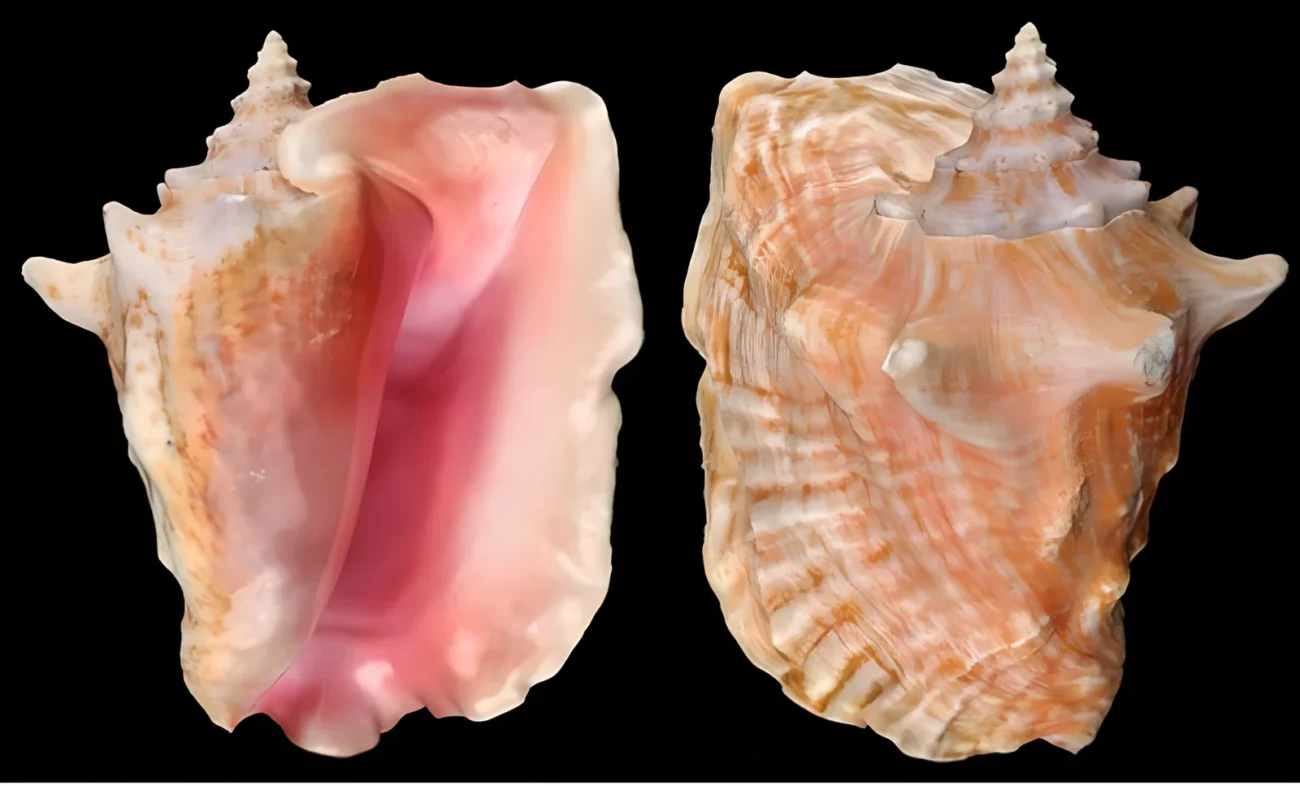
Conch pearls are calcareous concretions produced by the queen conch, a large marine gastropod found in the Caribbean. In current scientific and regulatory sources, this mollusk is commonly referred to as Aliger gigas, though older gemological literature often uses Strombus gigas.
Unlike classic bead-cultured or tissue-nucleated pearls, conch pearls are classified as non-nacreous pearls. That means they do not display the layered nacre structure seen in oysters and mussels. Instead, they show a porcelaneous appearance and, in fine examples, a silky flame pattern caused by their internal crystal arrangement.
For readers who want to verify the gemological terminology, GIA’s historical overview of queen conch pearls is still one of the best starting points, especially for the terms non-nacreous, porcellaneous luster, and flame structure.
Where Conch Pearls Come From
Conch pearls are mainly associated with the Caribbean region, including waters around the Bahamas, the Dominican Republic, the Yucatán Peninsula, and the Gulf of Honduras. This regional identity is important because the queen conch itself is a Caribbean species, and the pearl is a rare by-product of that mollusk rather than a standardized farm output.
The queen conch is also historically important as a food resource in the Caribbean. In other words, the mollusk was never valued only for pearls. The pearl is an exceptional natural occurrence inside an animal better known for its meat and shell.
Because the queen conch is the biological source of the pearl, understanding the mollusk helps explain the rarity of conch pearls. Readers who want the species background can refer to NOAA’s queen conch species page for distribution and current conservation context.
How to Recognize a Conch Pearl
Typical colors and shapes
Conch pearls are best known for pink, peach, and salmon-like tones, though white or cream examples can also occur. In the market, strong pink is usually the most desirable color, but color alone is not enough to make a stone exceptional.
Their shapes are often irregular. Oval, oblong, pear-shaped, semi-baroque, and baroque forms are all common. A perfectly round conch pearl is far less common than many buyers expect, which is one reason well-proportioned stones attract so much attention.
The flame structure
The most famous visual feature of a fine conch pearl is the flame structure. This is not simply a random surface marking. It is a soft, silky pattern created by the internal arrangement of elongated crystals, and it often appears as moving bands or delicate streaks under light.
This feature matters because it helps distinguish a fine conch pearl from ordinary shell material or lower-interest non-nacreous concretions. The flame effect can vary greatly in strength. Some pearls show it clearly and beautifully, while others have weaker or less attractive patterning.

Porcelaneous luster vs. nacreous luster
This is one of the easiest places for beginners to get confused. A conch pearl can be beautiful and highly valuable, but its beauty is different from the mirror-like luster of nacreous pearls. Instead of crisp reflections from layered nacre, fine conch pearls often show a smooth porcelaneous glow with a silky, almost soft-focus appearance.
That difference is not a flaw. It is part of what makes conch pearls recognizable and collectible.
Why Conch Pearls Are So Rare
The original lesson correctly emphasized rarity, and that point should absolutely be preserved.
Conch pearls are rare because they are still primarily natural occurrences rather than standardized cultured products. Even when pearls are found in queen conchs, only a small portion are attractive enough in color, surface, shape, and structure to become gem-quality stones. Larger fine examples are even rarer. GIA’s classic conch pearl reference notes that specimens over 10 carats are rare, and truly fine round examples are rarer still.
It is also important to update one older simplification often found in legacy articles: it is no longer safest to say conch pearls are “impossible” to culture in absolute terms. A more accurate modern statement is that commercially important conch pearls are still overwhelmingly natural, and stable large-scale cultivation remains extremely limited.
That distinction protects technical accuracy without weakening the original industry message: fine conch pearls are still genuinely scarce.
Value and Collector Appeal
Conch pearls are highly valued because rarity alone is not their only selling point. A fine stone also needs attractive color, appealing shape, clean surface, visible flame structure, and enough size to stand out.
In practice, the market tends to value conch pearls most highly when several qualities come together at once:
- an even and attractive pink to pink-peach bodycolor
- a clear, lively flame structure
- a pleasing face-up shape
- relatively clean surface quality
- larger size, especially in well-balanced stones
That combination is difficult to find, which is why conch pearls are strongly favored by specialty collectors and high-end jewelry designers. Their appeal comes not only from scarcity, but from the fact that they look unlike ordinary commercial pearls.
A Short Note on Conservation and Trade
Modern readers should also know that the queen conch is not just a gemological topic. It is also a real marine species with conservation significance. CITES lists queen conch in Appendix II, and NOAA states that the species was listed as threatened under the U.S. Endangered Species Act in 2024.
This does not turn conch pearls into a policy lesson, but it does help explain why supply is closely tied to the realities of a natural Caribbean species rather than the scalable farming model seen in mainstream pearl categories.
Final Thoughts
Conch pearls occupy a very special place in the pearl world. They are natural, highly uncommon, visually distinctive, and immediately recognizable when a strong flame structure is present. Their porcelaneous appearance, Caribbean origin, and unusual rarity make them one of the most memorable non-nacreous pearls discussed in this course.
If this lesson introduced one important idea, it is this: conch pearls are not valuable simply because they are pink. They are valuable because color, structure, rarity, and natural origin come together in a material that is still difficult to replace through commercial cultivation.
In the next lesson, we will move from conch pearls to another remarkable marine pearl type: Abalone Pearls.
Are conch pearls real pearls?
Yes. In gemology and in the jewelry trade, conch pearls are treated as real pearls. However, they are non-nacreous pearls, so their internal structure and visual appearance differ from classic nacreous pearls.
What is the flame structure in a conch pearl?
The flame structure is the silky, streak-like visual pattern seen on the surface of fine conch pearls. It is related to the internal arrangement of elongated crystals and is one of the most important identifying features of a fine conch pearl.
Are conch pearls natural or cultured?
In commercial reality, conch pearls on the market are still overwhelmingly natural. Small experimental cultured examples have been documented, but large-scale routine commercial production has not replaced natural supply.