
The MJ Pearls Grading & Sorting Guide

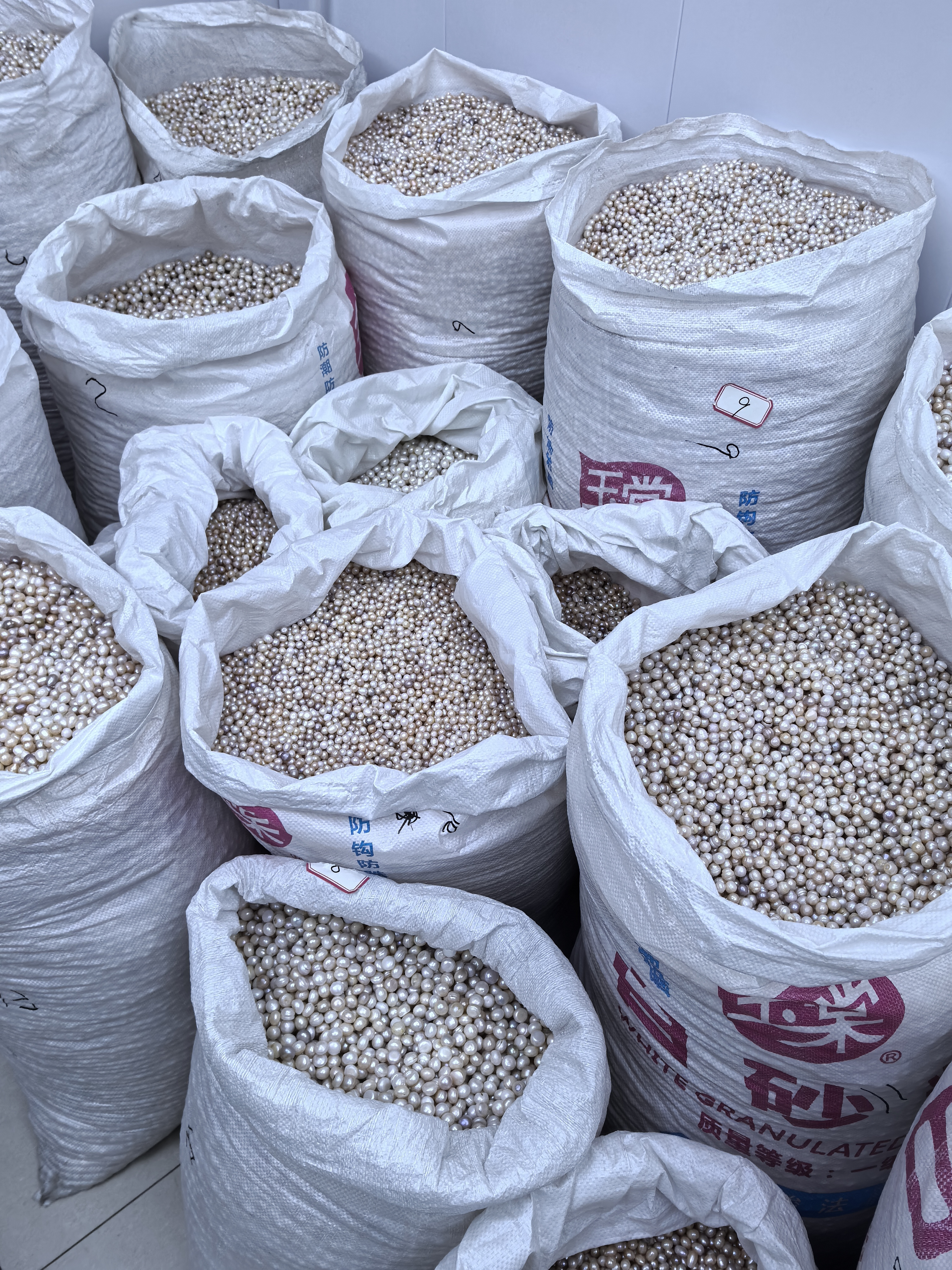
How We Evaluate Pearls and Define Quality Ranges
In the pearl world, one thing deserves to be said upfront:
Pearls don’t have one single, globally enforced grading system the way diamonds do.
Pearls are organic gems. Their beauty depends on many variables—luster, surface, shape, size, overtone, and even small differences from one harvest or batch to the next. In many pearl markets, grading is best described as a trade language built through experience, not a universal scientific standard.
That said, grading still matters—especially for wholesale buyers.
Because the real purpose of grading is simple:
to help buyers and sellers align expectations using consistent quality terms.
This page explains how we sort pearls at MJ Pearls, what our grades mean, and how you can use them to shop with confidence.
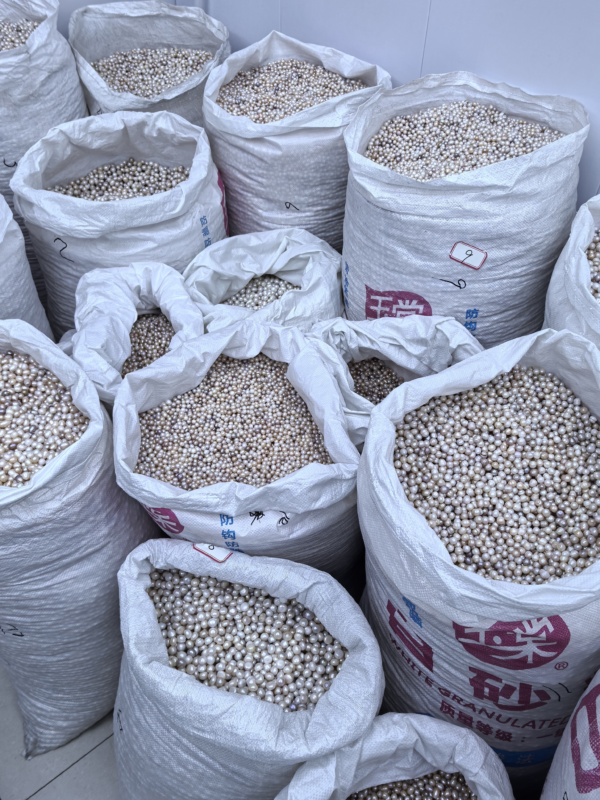
1) Our sorting method: yes, it’s done by eye—by trained eyes
We won’t oversell this as “lab grading.”
The reality is: in our local pearl market, sorting is primarily done by experienced graders. People who have worked with pearls for years can spot differences quickly and consistently—how sharp the reflections are, how clean the surface looks, how round a pearl really is, and how well a strand matches as a whole.
Within our team, sorting is specialized: some staff focus on shape and category sorting, while others focus on quality grading within each lot. Pearl sorting is a skill that depends heavily on experience, repetition, and trained judgment—built through working hands-on with pearls every day.
Think of it as a craft-based evaluation:
- built on daily repetition and long-term training
- based on comparing large volumes of pearls side by side
- reinforced by real-world trading feedback over many batches
We’re transparent about this because we believe trust comes from honesty, not exaggeration.
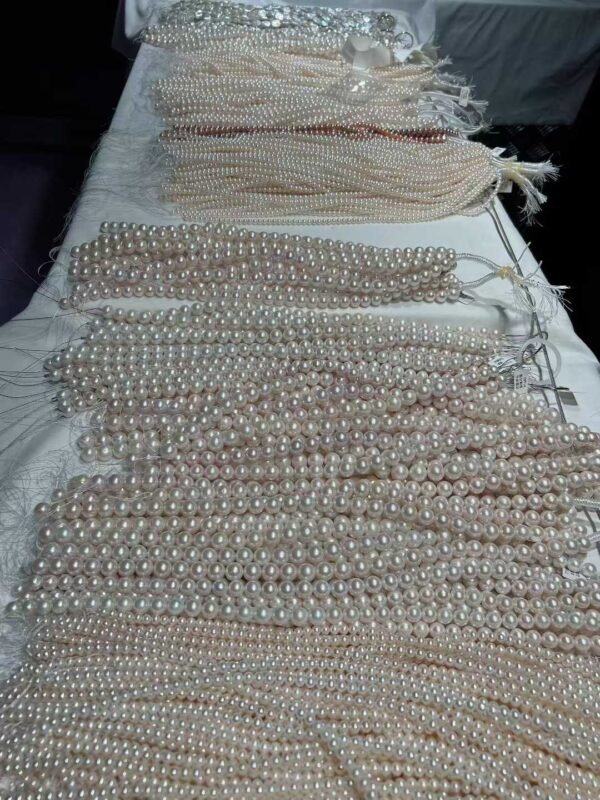
2) The three most important factors we grade
Within the same pearl type/category (and within a comparable size range), our quality judgment focuses on three core dimensions:
① Luster & Overtone (the most important)
Luster is the “first impression” of quality. We look for:
- brightness and clarity of reflection (sharp vs. soft/blurred)
- how “alive” the surface looks as you move the pearl
- overtone/aurora effects and whether the color feels clean and layered
Two white pearls can look completely different in value once you compare luster and overtone.
② Surface / Blemishes
Pearls are natural. Tiny marks can exist. What matters is:
- how visible the blemishes are at normal viewing distance
- where they sit (front-facing vs. less visible areas)
- the type of blemish (light pinpoints vs. deeper pits, fine lines vs. heavy rings)
③ Roundness (especially for round pearls)
The closer to perfectly round, the rarer and more valuable. We evaluate:
- whether the shape deviation changes the overall look
- whether the strand looks “even” and consistent
- whether there’s an obvious oval/flat feel
3) Our grading scale: A / AA / AAA / AAAA
To make wholesale sourcing simpler, we use a four-level scale as a quality range indicator within the same category.
Important note: Grades are meaningful when comparing pearls of the same type and similar size/shape category.
For example, 7–8mm and 10–11mm are naturally priced in different rarity bands.
AAAA — Top-tier, rare lots
- Roundness: near-perfect round (for round pearls)
- Surface: extremely clean; only minimal, non-distracting marks
- Luster/Overtone: strong, crisp luster; noticeable overtone/aurora when present
These are genuinely rare and show up only in a small portion of batches.
AAA — Nearly perfect, high-end “core quality”
- Roundness: very close to round
- Surface: very clean
- Luster: strong luster
This is a go-to quality range for many brands’ premium everyday lines—consistent, beautiful, and reliable for finished jewelry.
AA — High value, very usable quality
AA isn’t “bad.” It’s often the most practical balance in wholesale:
- more tolerance in surface OR roundness OR luster
- but typically two out of the three core dimensions remain noticeably strong
This range is popular for design-focused pieces, production lines, and value-driven collections that still need a “good pearl look.”
A — Entry/value range, great for production
- more tolerance in two of the three dimensions (luster/surface/roundness)
- best for budget-sensitive collections, high-volume production, or styles where tiny imperfections aren’t the focus
We prefer to describe A clearly rather than dress it up—because setting accurate expectations is part of being responsible.
4) Other major price drivers (and why we sort by batches)
Many factors that affect price are also the reason pearls naturally get separated into different lots.
① Size: bigger is rarer
In freshwater non-bead pearls, larger sizes typically require more time and a lower success rate—so rarity rises quickly with size.
When we match pearls into strands, we usually control size range by:
- within 1mm (e.g., 5–6mm, 8–9mm)
- sometimes within 0.5mm (e.g., 7.5–8mm) when tighter matching is needed
Size is always clearly listed in the product details.
② Shape: round pearls vs. baroque pearls
- For round pearls, closer to round = rarer = higher value. We group similar roundness together so the strand looks consistent.
- For baroque and other non-round shapes, value depends on rarity and “how good the shape looks”—and taste is subjective. Cultural preference can vary a lot, and the same baroque lot can feel very different to different designers.
That’s why we lean on real photos and videos. For baroque pearls, visual selection is the most reliable way to source the best value for your design.
5) Nacre thickness & bead vs. non-bead (freshwater)
Unless specifically stated, our freshwater pearls are typically non-bead cultured, meaning they are made of 100% nacre.
This usually means:
- a rich nacre feel and natural luster character
- but truly large sizes and perfectly round shapes become rarer
Bead-nucleated freshwater pearls (often called Edison pearls) are easier to grow in larger sizes and with better roundness. However, nacre thickness is naturally limited by the bead nucleus—so we always label this clearly when a product is Edison / bead-nucleated.
6) How to use this grading when shopping
Use our grades as a fast filter, then choose based on your project needs:
- For premium, brand-level finished jewelry: AAA / AAAA
- For design pieces and best value balance: AA is often the sweet spot
- For budget-driven production lines: A / AA can be the right choice
- For strands or sets where matching matters most: tell us your use case—we can prioritize uniformity (size window, luster consistency, front-facing cleanliness, etc.)
And we always recommend:
look at photos, watch videos, and sample first before ordering large quantities.
Pearl beauty is visual. No description can replace the real look.
7) One last thing: we won’t turn grading into a myth
Pearls are not “perfect objects.” They’re natural gems with personality.
We won’t pretend there’s one absolute grading truth for the entire industry.
But we will be consistent and transparent about how we sort and what each grade means in our store—so you can buy with a clear expectation.
Pearls may be natural and variable—but buying them doesn’t have to be unclear.
If you want help selecting pearls for your exact application (necklaces, earrings, rings, sets, bridal, daily wear, etc.), feel free to message us. We’ll source the best match for your goal and budget.
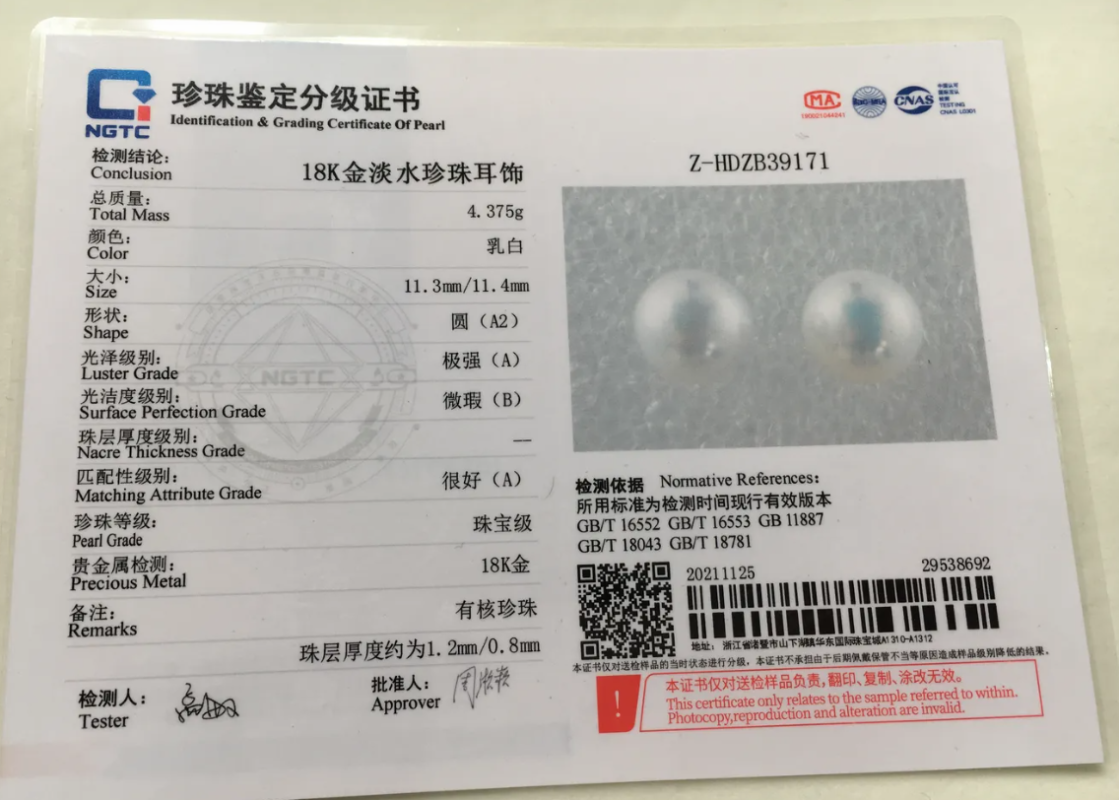
Optional Pearl Certificates (Available with Your Order)
If you’d like additional documentation, pearl certificates can provide more detailed, measurable information—such as size, color, luster, and roundness—depending on the certificate type and the specific item.
We can offer the following certificate options upon request (order together with your pearls, and we will ship the certificate with your order):